Focal Cortical Dysplasia (FCD)
Summary
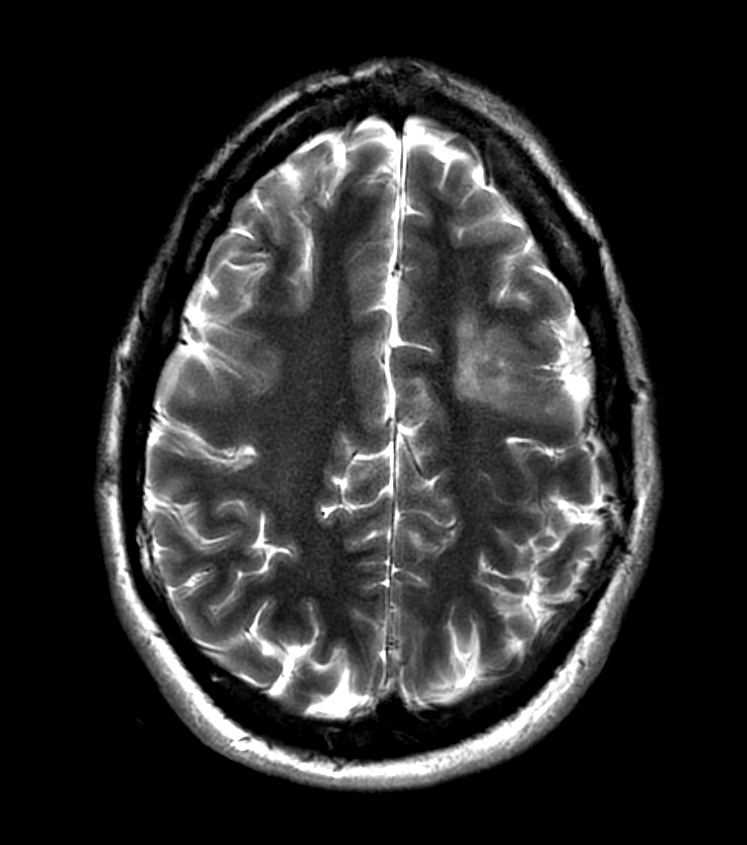
- Focal cortical dysplasia is a congenital malformation of cortical development characterised by abnormal neuronal migration, proliferation, and organisation.
- It is a common cause of drug-resistant epilepsy in children and young adults.
- Imaging findings include cortical thickening, blurring of the grey-white matter junction, and transmantle sign on MRI.
Pathophysiology
- FCDs result from disruptions in normal cortical development during embryogenesis
- Classified into three main types based on histopathological features:
- Type I: Abnormal cortical layering
- Type II: Dysmorphic neurons and balloon cells
- Type III: Associated with other lesions (e.g., hippocampal sclerosis, tumours)
- Genetic mutations, particularly in mTOR pathway genes, have been implicated in some FCD cases
Demographics
- Most common cause of focal epilepsy in children and second most common cause in adults
- Prevalence estimated at 1 in 2,500-5,000 individuals
- No significant gender predilection
- Can occur at any age, but typically presents in childhood or early adulthood
Diagnosis
- Clinical presentation:
- Focal seizures, often drug-resistant
- Developmental delay or cognitive impairment in some cases
- EEG:
- Focal epileptiform discharges
- Localised slow activity
- Neuroimaging:
- MRI is the gold standard for diagnosis
- CT may be normal or show subtle cortical abnormalities
- Histopathological examination of resected tissue for definitive diagnosis
Imaging
- MRI findings:
- Cortical thickening1
- Blurring of the grey-white matter junction
- Transmantle sign (subcortical white matter signal abnormality extending from cortex to ventricle)
- T2/FLAIR hyperintensity in the affected cortex and subcortical white matter
- Abnormal gyral/sulcal patterns
- Advanced MRI techniques:
- Diffusion tensor imaging (DTI): Altered white matter tract organisation
- MR spectroscopy: Reduced N-acetylaspartate (NAA) and increased myoinositol
- PET:
- Focal hypometabolism in the affected area
- SPECT:
- Ictal hyperperfusion and interictal hypoperfusion

- 30-year-old patient with frontal lobe seizures.
- MRI showed a subtle region of cortical thickening at the depth of the inferior frontal sulcus.
- A hyperintense tail extending towards the lateral ventricle indicated a Type II focal cortical dysplasia.

- 25-year-old male presenting with left hand sensory aura.
- MRI showed thickened cortex of the long gyri of the right insula (red arrow) consistent with a focal cortical dysplasia.

- A 30-year-old patient with epilepsy since childhood.
- MRI showed cortical thickening and subcortical T2-hyperintensity that was consistent with a FCD.

- A 20-year-old presented with a left posterior frontal seizure focus based on EEG and clinical presentation.
- MRI showed a juxtacortical rim of high signal on T2-weighted imaging and blurring of the grey-white matter interface on T1-weighted imaging.

- A 30-year-old had a long history of nocturnal seizures.
- MRI showed cortical thickening, hyperintensity and blurring within the posterior superior frontal sulcus and a faint hyperintensity extending down to the ventricle.
Differential diagnosis
| Differential Diagnosis | Differentiating Feature |
|---|---|
| Low-grade glioma | FCD typically has blurring of gray-white matter junction; gliomas often have more distinct borders |
| Tuberous sclerosis | Tuberous sclerosis usually has multiple cortical tubers; FCD is typically a solitary lesion |
| Polymicrogyria | Polymicrogyria shows excessive cortical folding; FCD often has a thickened cortex |
| Hemimegalencephaly | Hemimegalencephaly affects an entire hemisphere; FCD is usually focal |
| Ganglioglioma | Gangliogliomas often have cystic components; FCD is typically solid |
| Dysembryoplastic neuroepithelial tumour (DNET) | DNETs often have a "bubbly" appearance on MRI; FCD typically appears as cortical thickening |
| Encephalitis | Encephalitis often shows diffuse involvement and oedema; FCD is a stable, focal lesion |
| Cortical infarct | Infarcts follow vascular territories; FCD does not respect vascular boundaries |
| Rasmussen's encephalitis | Rasmussen's shows progressive hemispheric atrophy; FCD is non-progressive |
| Sturge-Weber syndrome | Sturge-Weber has leptomeningeal angiomatosis; FCD does not involve meninges |
-
Urbach et al. MRI of focal cortical dysplasia. 2022. Neuroradiology - Open in new tab. ↩